

DAZAO Showcases 5-Axis CNC Machining Capabilities at EMO Hannover 2025
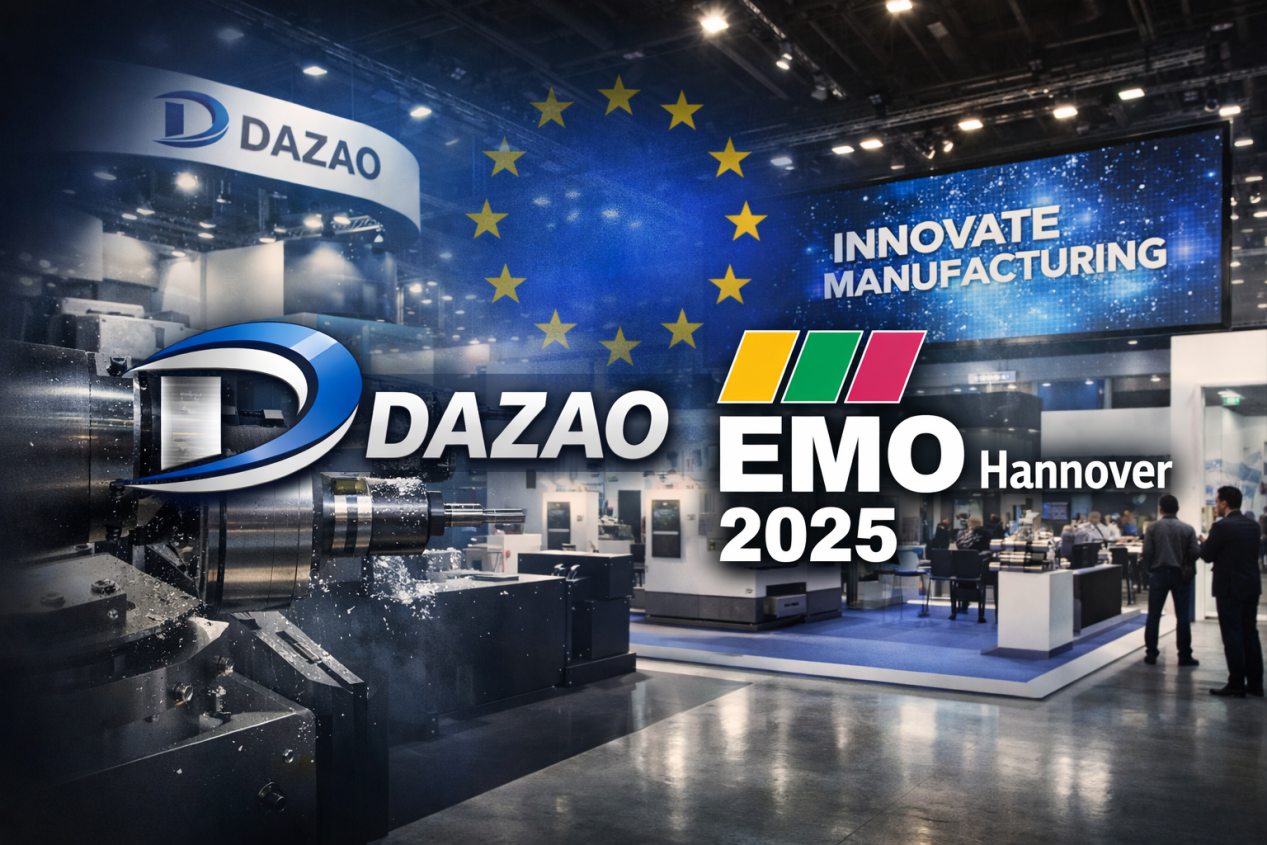
DAZAO in EMO Hannover 2025
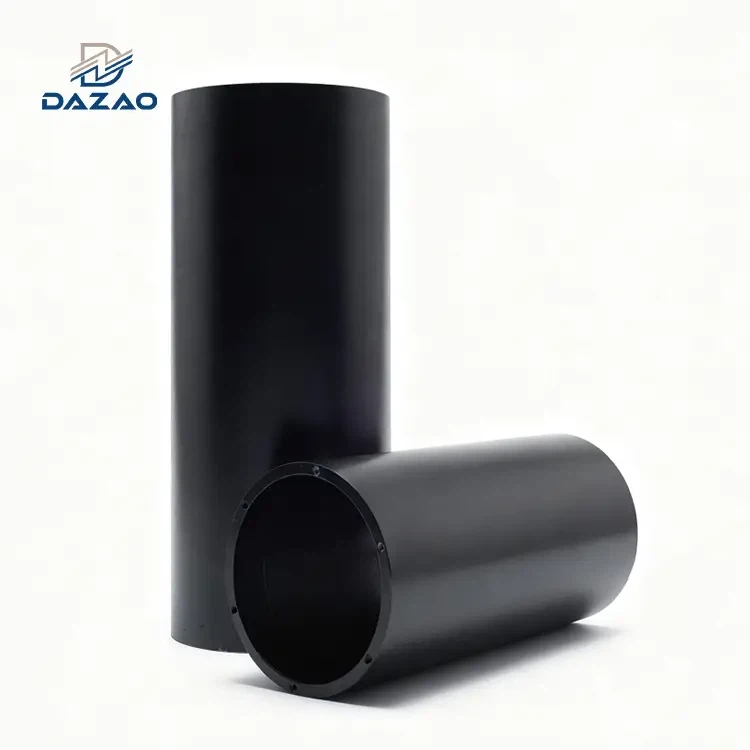
Precision CNC Aluminum Watertight Enclosures

High-Precision Aluminum Alloy Drone Frames
Across the five-day show, engineering and sourcing teams signaled a clear shift: capacity and pricing still mattered, but conversations increasingly centered on repeatability, traceability, and how quickly design feedback could be converted into a first article that passes review. Against that backdrop, Xiamen DAZAO Machinery Co., Ltd. (DAZAO) brought a model aligned with how many European programs now qualify partners—pairing Best-in-Class Custom CNC Machining Services with the documentation discipline needed to make precision “approval-ready.”
Founded in 2000 and certified to ISO 9001:2015 and IATF 16949:2016, DAZAO supports 1,000+ customers across 100+ countries and operates a dedicated sampling team capable of shipping prototypes in 3–5 working days. Looking back after EMO, what stood out was not a single capability claim, but how DAZAO connected three disciplines into one practical outcome: multi-axis machining decisions, material-aware process control, and documentation-led quality management—resulting in complex metal parts that can be verified, reproduced consistently, and moved from sample to production with far less friction.
EMO Hannover 2025: Where Precision Metal Machining Drives Innovation
EMO Hannover 2025: Innovate Manufacturing in Practice
As one of the world’s leading trade fairs for production technology, EMO is where suppliers show new equipment, automation concepts, and production ideas—but it’s also where buyers pressure-test what those ideas mean on real parts. In 2025, the show’s “Innovate Manufacturing” framing landed in a very grounded way: many discussions circled back to how manufacturers can keep quality stable while facing cost pressure, talent gaps, and sustainability expectations.
That shift matters for how booths get evaluated. Instead of treating precision as a spec sheet, visitors increasingly treated precision as a system: engineering choices, process discipline, inspection evidence, and the ability to respond fast when designs change.
Three trends European buyers used to screen CNC partners
Trend 1: Difficult Materials Are Now Standard Specs, Not Special Requests
Performance requirements across automotive, aerospace, and medical sectors have made materials like stainless steel, titanium alloys, and nickel-based superalloys commonplace in procurement specs. The question has evolved from “Can you machine this?” to “How do you control work hardening, tool wear, and thermal distortion to ensure batch consistency?” Expertise is measured by predictable outcomes in difficult-to-machine metals.
Trend 2: High Precision Is the Standard—and It Must Be Audit-Ready
European buyers increasingly treated “tight tolerance” as an audit-ready outcome rather than a number on a drawing. Beyond the tolerance callout itself, discussions quickly moved to what makes a part acceptable inside their quality system: first-article and full-dimensional inspection results, material traceability, and evidence of stable process control across batches.
That is exactly why, at DAZAO, a complete FAI package and the Mill Certificate are considered as essential as the part itself—without the paperwork, the delivery is only half done. This documentation-led mindset turns strict tolerances into something customers can verify, approve internally, and reproduce with confidence from one production batch to the next.
Trend 3: Complex Geometry Is Becoming the Default Design Language
To enhance reliability and reduce assembly, components are increasingly consolidated into single, complex parts. This results in designs with multi-face features, compound surfaces, and critical internal geometries—where the relationship between features is as important as each individual dimension. This trend elevates manufacturing strategy from simple part processing to functional geometry management.
Why Multi-Axis CNC Emerged as a Practical Focus at EMO
Multi-axis machining wasn't presented at EMO as advanced technology for its own sake, but as a practical solution to a specific problem: how to deliver complex parts more stably and efficiently. Single-setup capability for multi-face machining, tight tolerance control, reduced secondary positioning errors, and suitability for difficult metals made multi-axis approaches central to technical discussions.This aligns precisely with DAZAO's two decades of multi-axis precision machining expertise—matching European procurement's evaluation priorities.
5-Axis CNC Machining for European Industrial Applications
In many European industrial programs, five-axis machining is not just a premium option anymore. now a practical need for keeping geometric relationships in more complex part designs.
Electric vehicle battery housings, robotic joint interfaces, aerospace brackets, and medical frames often have many features. They need tight positional tolerances and complex surface transitions in one component. In these cases, it is more important to control how features relate to each other than to control one dimension alone.
A five-axis strategy lets us complete these parts in one setup. This keeps datum consistent and reduces errors from changing fixtures.
This is important when tolerances are within ±0.01 mm. also essential for sealing surfaces, bearing holes, and threaded connections. These parts need to stay aligned across different planes. By minimizing secondary repositioning, reduce stack-up variation and improve repeatability from first article to production batches.
That said, five-axis machining is not automatically the most economical solution for every project. For simple prismatic parts with generous tolerances, three-axis platforms may offer better cost efficiency. The key evaluation is functional complexity—when feature relationships define performance, five-axis machining often delivers measurable stability advantages for European qualification standards.
DAZAO's engineering team evaluates each project to recommend the most cost-effective manufacturing approach rather than defaulting to the most sophisticated equipment.
DAZAO at EMO: Demonstrating Advanced Metal Machining Capabilities
At EMO, DAZAO focused on results, not just equipment. The booth featured production-grade parts where geometry, material behavior, and acceptance evidence converge—showing what was made, what makes it difficult, and how it’s verified.
Precision Metal Components That Drew Industry Attention
1. Seal-Critical Aluminum Watertight Enclosure Tubes for Underwater Vehicles
For many European programs, “watertight” is not a marketing term—it’s a functional requirement that lives or dies on sealing features. DAZAO used Precision CNC Aluminum Watertight Enclosures—specifically Aluminum Watertight Enclosure Tubes—to make that point concrete. These ROV (remotely operated vehicle) and AUV (autonomous underwater vehicle) housings exemplify functional precision requirements. Components incorporate multiple end-face seal grooves, lateral interface ports, and internal flow channels—all demanding tight form and position tolerances. Seal surface concentricity must hold within ±0.025mm; otherwise, pressure integrity fails in operational environments.
The Manufacturing Challenge in Specific Terms:
Geometric Complexity: End-face O-ring grooves, sidewall threaded ports, and internal positioning surfaces occupy different machining orientations. Traditional three-axis processing requires 4–6 setups. Each fixture change introduces positioning errors (typically ±0.01–0.02mm) that accumulate, compromising relative positional accuracy between critical sealing interfaces.
Material Behavior: Aluminum's thermal expansion coefficient (approximately 23×10⁻⁶/°C) means cutting heat causes dimensional drift during processing.
Thin-Wall Constraints: Some sections measure only 0.5mm thick. Excessive clamping force causes distortion; insufficient force compromises cutting stability.
DAZAO's Systematic Approach:
Single-Setup Multi-Axis Strategy: Five-axis machining centers complete all internal cavity milling, end-face groove cutting, and lateral hole drilling in one fixture. Unified datum reference maintains functional surface relationships within ±0.025mm tolerance.
Thermal Control Protocol: High-flow coolant systems (>30L/min flow rate) remove cutting heat; optimized parameters (reduced cutting speed, increased feed rate) minimize heat generation; adequate cooling intervals before finishing passes ensure workpiece temperature stability.
Application-Specific Fixturing: Vacuum absorption combined with soft-jaw clamping distributes holding forces evenly across thin-wall structures, preventing localized stress concentration and distortion.
Surface Treatment and Validation: Type III hard anodizing (35–50μm thickness, 70 Rockwell C hardness) provides long-term corrosion resistance. Every component undergoes pressure testing simulating operational conditions before shipment, accompanied by complete CMM inspection reports, material certificates with heat numbers, and pressure test documentation.
Customer feedback confirmed that these enclosures operate at 50-meter depths for 500+ hours without seal failure—verifying manufacturing quality reliability.
2. Six-Axis Robotic Joint Accessories: Precision Metal Interfaces
Industrial robotic joint components represent the interchangeability challenge. Mating surfaces must maintain consistent geometry across production batches ensuring field-replaceable parts function without custom fitting. Any deviation in assembly interfaces gets magnified at the robot end effector, compromising overall motion accuracy.
Manufacturing Requirements: General tolerances of ±0.01mm with critical mating zones controlled to ±0.005mm, surface finish specifications of Ra 0.8–1.6μm on assembly faces to prevent fretting wear, and batch-to-batch consistency enabling true part interchangeability.
DAZAO's Process Strategy: Five-axis simultaneous machining processes all interface surfaces in coordinated setups, maintaining geometric relationships between bearing bores, mounting faces, and thread interfaces stable from part 1 through part 10,000. Optimized toolpath planning and thermal management control critical zone tolerances within ±0.005mm specification. CMM reports, every-2-hour inspection logs, and FAI documentation provide traceable proof of manufacturing consistency—enabling customers to specify DAZAO components confident that field replacements will function as reliably as original equipment.
3. High-Precision Aluminum Alloy Drone Frames: Complex Multi-Face Geometry
Modern high-performance drone frames pursue extreme stiffness-to-weight ratios through integrated designs featuring complex surfaces, structural ribs, and numerous mounting points consolidated into single components.
The Structural Challenge: Mounting face coplanarity and hole position accuracy must hold within ±0.02mm to ensure flight stability. Thin-walled sections optimized for weight savings create machining challenges—clamping forces adequate for workholding can distort the geometry being machined.
DAZAO's Engineering Solution: Teams perform manufacturability analysis designing application-specific fixtures. Multi-axis CNC capability accesses all required surfaces from optimal approach directions for roughing and finishing operations. Critical focus maintains all motor mount faces and hole patterns within ±0.02mm positional accuracy. When customers specify anodizing for corrosion protection, engineering teams factor coating thickness into pre-machining dimensions—ensuring final assembly dimensions meet specification after surface treatment rather than requiring post-coating correction.
These components demonstrate how DAZAO converts multi-axis machining capability into verifiable part outcomes through systematic process control and complete documentation infrastructure. Best-in-class positioning derives from delivering documented, reproducible manufacturing results—not just parts, but outcomes customers can verify and scale to production.
Inside DAZAO's CNC Advantage: Multi-Axis Strategy and Quality Discipline
The components described above represent outcomes. Understanding how DAZAO achieves these results requires examining three interconnected manufacturing disciplines that convert equipment capability into reliable production outcomes.
Multi-Axis Strategy: Engineering Value Beyond Equipment
Multiple setups carry hidden costs: alignment time, re-measurement cycles, process variability, and rework risk. Each fixture change introduces potential for cumulative error. For parts requiring ±0.01mm tolerance between features on opposite faces, three-setup processing can consume the entire tolerance budget in positioning uncertainty alone.
DAZAO's multi-axis approach establishes unified datums that keep seal faces, assembly interfaces, and mounting locations geometrically locked. This isn't merely faster—it's fundamentally more repeatable.
Material-Sensitive Process Control
Stainless steel exemplifies why material awareness determines manufacturing success. Work hardening occurs the moment a tool dwells; tools wear rapidly if coolant flow proves insufficient; thermal management becomes critical as stainless steel's poor conductivity concentrates heat.
DAZAO's process library addresses these behaviors systematically: cutting parameters optimized for specific grades (316L medical, 304 general, 17-4PH high-strength), continuous-engagement tool paths that eliminate dwell time, aggressive coolant strategies, and tool wear monitoring with disciplined replacement schedules. This four-element discipline ensures part 1 and part 10,000 meet identical standards—the definition of manufacturing repeatability.
Documentation-Led Quality Assurance
DAZAO's quality framework converts manufacturing into evidence: material certificates with heat numbers prove provenance, CMM-verified dimensional reports document conformance, RoHS compliance files satisfy regulatory requirements, every-2-hour inspection logs demonstrate process stability, and consistent four-layer packaging (paper, EPE, foam, crate) protects quality through transit. Put simply: the part is the hardware, and the documents are the acceptance pathway—and DAZAO treats both as part of the shipment.
From EMO Discussions to Project Execution: How DAZAO Shortens the CAD-to-Part Cycle
EMO conversations frequently centered on "validation cadence" and "delivery acceptance"—how quickly suppliers can prove they understand requirements and deliver verifiable samples.
DAZAO supports this with three concrete project actions:
Dedicated Sampling Department + 3-5 Working Day Prototypes: A specialized team focuses exclusively on rapid prototyping, isolating sample production from volume manufacturing to maintain quick-turn responsiveness.
Critical Dimension Inspection and Reporting: Full-dimensional inspection capability with CMM verification ensures samples arrive with complete documentation, enabling internal approval processes to proceed without delays for additional measurement.
Material Certification and Compliance Documentation: Heat number traceability, RoHS compliance files, and material test reports ship with samples, satisfying procurement's documentation requirements from the first part forward.
These capabilities help customers complete sample confirmation and internal acceptance faster—shortening the project launch timeline.
The DAZAO Difference: Partnership Built on Documented Precision
DAZAO's presence at EMO Hannover 2025 reinforced its position as a China-based leading precision CNC machining supplier delivering to European standards. The positive response from European manufacturers validated DAZAO's expertise in multi-axis technology and difficult metal processing.
DAZAO delivers more than machined parts—it delivers peace of mind through documented precision and traceable quality. Guided by "Quality First, Customer First" principles established over 20+ years, the company continues advancing manufacturing capability to support customer success as precision requirements evolve.
To explore how DAZAO's precision CNC machining services can support your next project, visit www.partengineer.com for complete capability information and quotation requests.
Xiamen Dazao Machinery Co., Ltd.
Dazao
+86 138 6010 0270
erica@dazaocn.com
Legal Disclaimer:
EIN Presswire provides this news content "as is" without warranty of any kind. We do not accept any responsibility or liability for the accuracy, content, images, videos, licenses, completeness, legality, or reliability of the information contained in this article. If you have any complaints or copyright issues related to this article, kindly contact the author above.
